

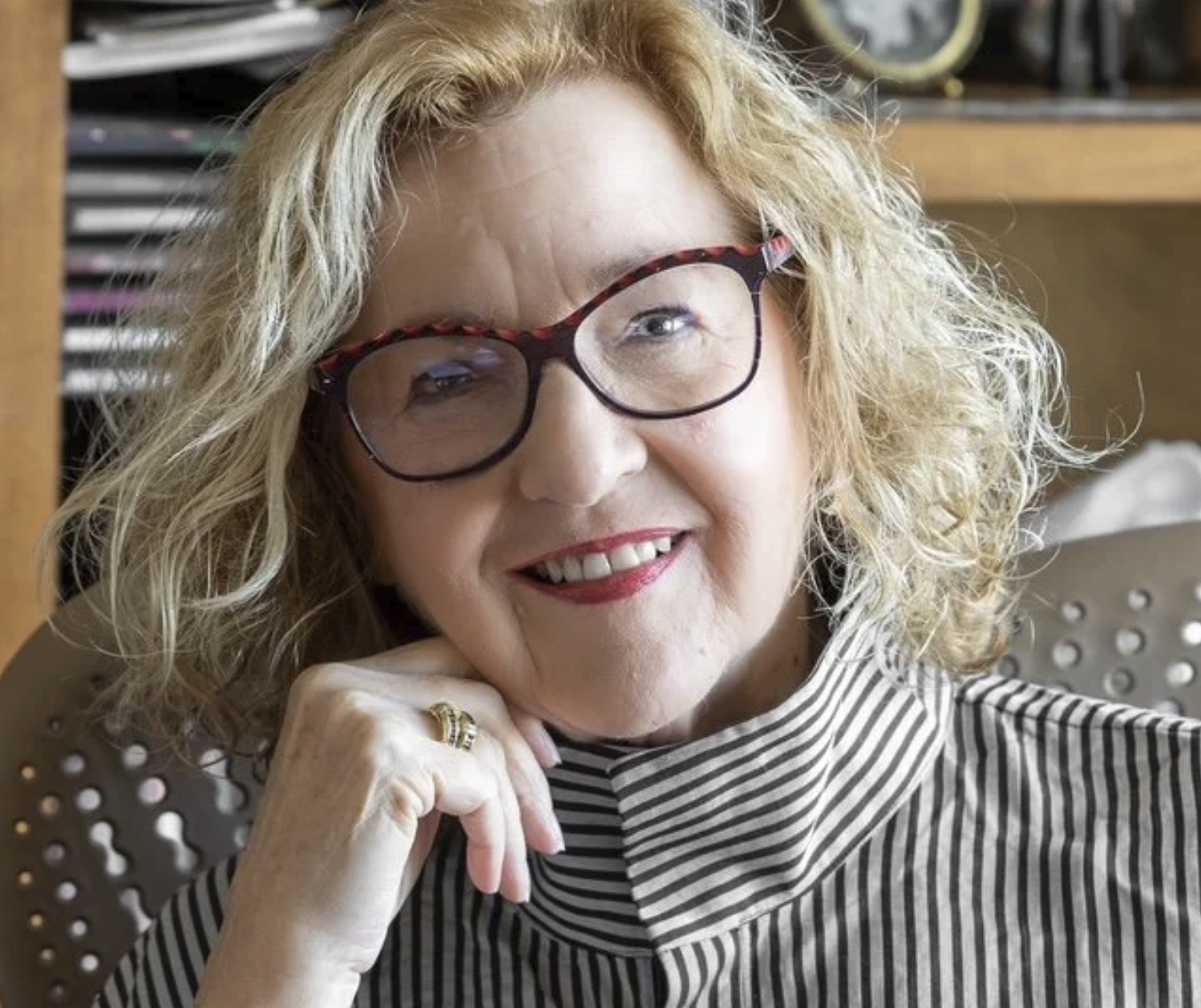
Mary Hannah Terzino’s fine, fine debut collection of short stories, Secrets and Other Hobbies (Cornerstone Press), spans decades. Some of the stories land in the now, and even a now that transcends today, while others evoke a specific time (middle of the last century) and place (middle America). As a boomer raised in the Midwest myself, I find a familiar comfort in this mid-century Kodachrome backdrop: gelatin and Miracle Whip salads; fur coats tossed across the bed at an afternoon gathering of bridge-playing neighbor women; train travel and battered Samsonite suitcases; distracted, brief-case carrying, suit-wearing fathers who forget to change their office shoes and socks when they put on shorts for a summer evening.
Mary and I met in the Midwest at a writers’ retreat, and it was there that I first discovered that we are of the same generation and relatively similar backgrounds. After reading Secrets and… I see that we also share an attraction to the tension and drama that often simmers under the surface of small town, ordinary moments and lives. Recently, we had the chance to talk about these things, and about a number of the stories that fill the pages in Secrets and Other Hobbies.
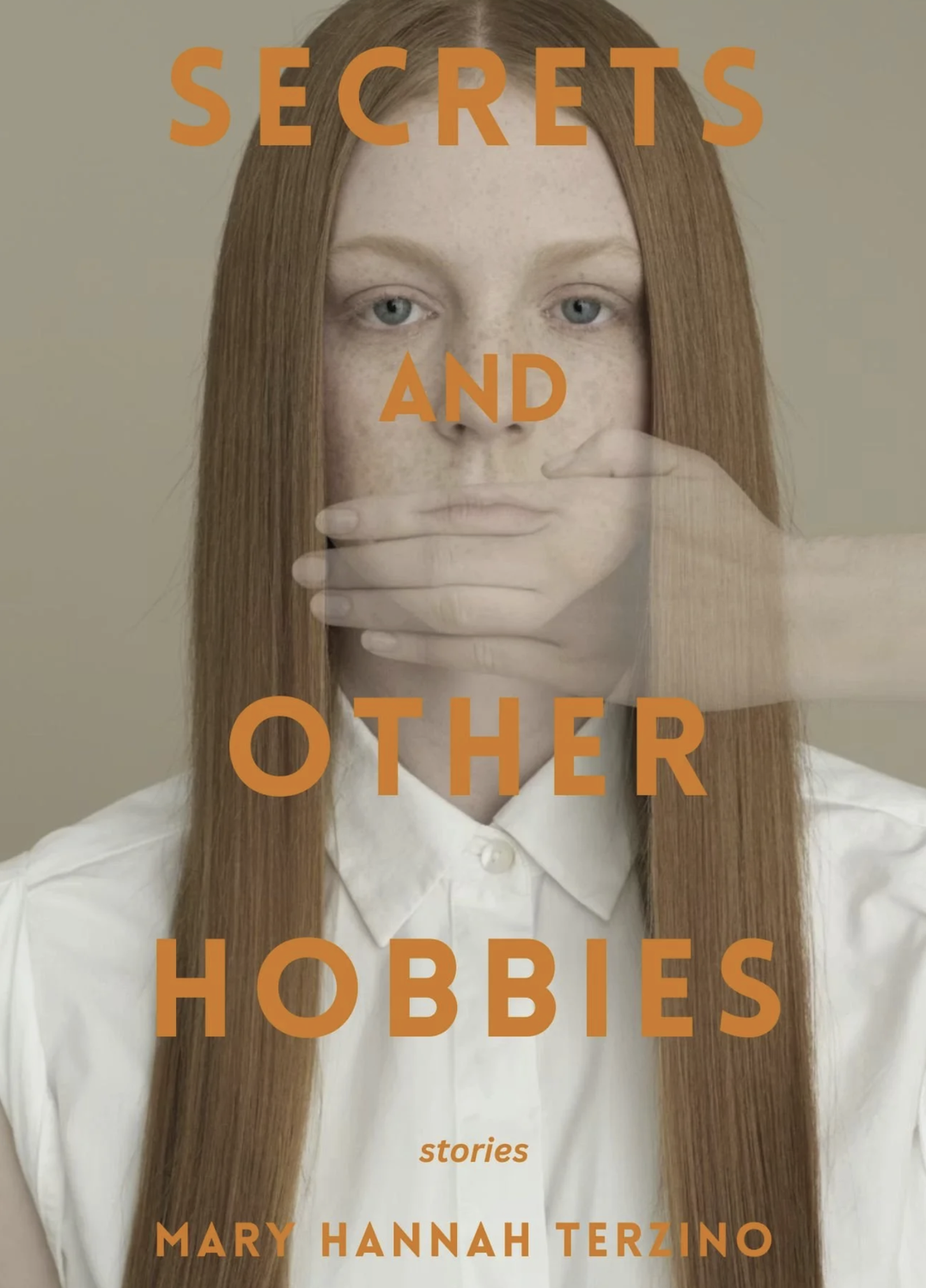
Patricia Ann McNair: “Bridge Club,” the first piece of the book, is one of the stories that is set firmly and essentially in the Midwest during the last mid-century. Mary, what is it that draws you to this time and this place as a storyteller?
Mary Hannah Terzino: I think there are two answers to your question. The first has to do with the appeal of the mid-century as a source of characters and I guess, zeitgeist. I grew up in the late 1950s and 1960s in a small Indiana town close to the Michigan border. I thought, and still think, it was kind of a magical place. Interesting, eccentric people lived in our neighborhood or were in the social circles of my parents and relatives. I have vivid memories of many of the townspeople—how they looked and the whispered anecdotes about their histories. The most interesting always had a whiff of tragedy about them. I once asked my father which of the alcoholically-active ladies from my childhood was the worst drunk. He gave three a designation: the Mean Drunk, the Happy Drunk, and the Tragic Drunk. The Tragic Drunk idea became the spark for Jan Wheeler in “Bridge Club,” although fictional Jan isn’t based on any particular real person. And Miss Ida in the “Obituaries” story was modeled loosely on a peculiar woman on my cousin’s paper route who hoarded newspapers and was reputed to attend a lot of funerals. I felt driven to invent a backstory that fit with what we saw as her oddness back then.
On a broader level, I’ve been disturbed by the fantasy that the mid-century was a good and mighty era, a time when men were men and women were women, that there was this extraordinary greatness to America back then that we must return to. I always perceived a societal controversy or conflict bubbling under the polite Midwestern surface of our town. Economic class inequality, prejudice about things like sexual preferences, disability and a woman’s proper place, and the deep and sometimes harmful pull of organized religion all existed then, and I’ve written about them. I want to show that while the mid-century was a time of Jello salads and Seventeen Magazine, it was also a hard time for a lot of individuals who couldn’t flourish under its rigid cultural norms. And those issues I mentioned still haven’t been fully resolved today.
The second part of your answer, when you mention rigid cultural norms and how some issues have not yet been resolved, makes me think of “The Wall at the Back Garden.” This is the first of a handful of stories in the collection that has a sort of speculative slant to it. You have created an American reality that is both seemingly impossible and perhaps—as we know now during this second Trump administration—all too possible. And as this small-town neighborhood closes in around your protagonist, her domestic, intimate concerns continue along their own trajectory, bringing the story to an extraordinary end in a once-ordinary world. This piece, with its inevitable ache, is very moving in personal as well as global ways. Where did it come from?
I wrote this piece during the Pandemic, when so many of us felt trapped. I was writing with a group of old friends on Zoom. My husband would find photos online, black-and-whites from the past. He’d deliberately obscure their real context. Each of us would write a piece of short fiction using one of the found photos as a prompt. The photo that inspired “The Wall at the Back Garden” was of a teenaged girl in a swimsuit who was hanging laundry on a line, with a large concrete wall behind her. This was during the “Build the Wall” era of political discourse, and I was pissed off about it. And I’d seen the Berlin Wall on a study trip to Germany as a young teenager, how it cleaved neighborhoods. As I looked at the photo, I wondered how a young girl might live in a world cut in two for inexplicable reasons, trying to hang on to girlhood as she’s forced into a fragmented life where she has to take on adult tasks. I decided to set it in the near but indefinite future. I thought this scenario was entirely possible.
Despite feelings of isolation and separation, as in “The Wall at the Back Garden,” there is so much neighborliness in these stories. People live close and keep an eye out for one another—in good and not-so-good ways. Can you talk about the close-knit and tangled communities you’ve created, and how they push you to the quiet, dramatic tension in these stories?
Neighborhoods are the center of so much drama, aren’t they? I’m so glad you picked up on this aspect of the stories. Midwestern neighbors have a certain way of interacting. There is both a friendliness and a reserve. Ed Petersen in “Bird Watching” can’t decide if he wants to be friends with his neighbor Irene or keep his distance so his life will remain private. The host-mom’s decision in “Wept the River” to stay away from her underage son’s boozy party was a move of reserve. Her neighborly gesture was to tell the kids they could come find her to get a ride if they got too drunk to drive. This combination had disastrous consequences. The contradiction between friendliness and reserve, nosy curiosity and a let-it-be attitude, create a tension that feels familiar to me and magnifies the losses some of these characters experience.
“Even at six years old, I knew who the alcoholics were.” Wow, what a great first line. The first line of “Bridge Club” and the first line of the book as a whole. It resonates through each story of the collection. You have so many of these intriguing opening lines. I wouldn’t call them “hooks” so much as “lures.” They attract your readers as opposed to snagging them, to trapping them. When and how do you find your first lines when you write a story?
Thank you for that. First lines are incredibly important to me as a storyteller; finding that “lure” you mentioned. As writers our first drafts sometimes include a lot of throat-clearing at the beginning of stories that has to be weeded out. I rarely write a good first line until I’m well into the revision process. Sometimes I can pluck the first line from elsewhere in the draft once I’ve figured out what the story is really about. The first line of “Bridge Club,” though, was an exception. That was the first sentence I put on paper when I wrote that story. It then informed the entire piece. As I was organizing the stories in the book into some semblance of order, I realized this opening line reflected the knowingness and maybe weariness of adolescent and teen protagonists elsewhere in the book. That told me “Bridge Club” had to be the first story.
Speaking of adolescents and teens, you dig deeply into their complicated, shifting perspectives to tell a number of these stories. Do you often write from that awareness? Why do these young people and emerging adults play such important roles in Secrets and Other Hobbies?
I was an adolescent girl of course, and I also raised one, so the territory’s familiar. But something more must have compelled me repeatedly to explore young women dealing with losses that they did not fully understand. The stories “Wept the River,” “Suitcase Twins,” and “Three Seasons of Judy Mitchell” fit this description the best. Writing “Judy Mitchell” towards the end of my work on the book finally revealed to me why I had this obsession. The first section concerns Judy at age 12 dealing with the absence of her mother during a pivotal summer in Judy’s life. Her mother, in the parlance of the day, has had a “nervous breakdown.” This episode is drawn from my own life: my mother all but disappeared the summer I was 12, for the same reason. The stigma against mental illness then (and perhaps still) was crippling. Like Judy, I was told I could never discuss it with anyone. Fortunately, my wonderful mom had a great recovery. I should add that despite borrowing these circumstances for the story, I am not Judy and my mother is not Judy’s mother. Fiction writers like you and me shamelessly invent characters and plot to make them suit our purposes!
Still, people might wonder why I would revisit this painful episode. Peter Ho Davies, a superb writer and teacher from University of Michigan, has talked about “the thing that persists”—a pivotal event that a writer revisits over and over again to make sense of it. For him, it was a time as a young boy when he witnessed his Welsh father protecting a young Sikh from harassment. He wrote about it in his fiction in many ways, some of them not obviously connected to the real incident, exploring his own reactions and emotions through his characters. I think the experience of grappling with my mother’s absence when I was 12, and the secrecy that surrounded it, was my “thing that persists”—even though the losses my young women characters deal with are more varied in circumstances and outcomes.
So there are all of these women and girls who propel much of the book, but you also work well with your male characters. What I can’t help but notice is that what makes your guys alive on the page is the way you handle their emotional lives through what they (think they) want or what they (think they) don’t; what they do and don’t do; what they say and what they withhold. It strikes me that what works here is the complex humanity you have given them—just as you provide for your female characters. How do you know that a story will be driven by a male perspective, a dude for a protagonist?
You’ve made me think about these protagonist dudes, but I’m not sure why they took hold. Often I’ll imagine a character first, then build a story around that person. I lived with Ed Petersen, the protagonist in “Bird Watching,” for weeks before it occurred to me how I could fashion an interesting story about a curmudgeonly alcoholic who was a loner. He’s not a type you initially think you want to read or write about, but he’d taken up residence in my brain and I couldn’t shake him. His story wouldn’t work very well with a female protagonist. Some tales just naturally fit with a leading man. One thing some of my guys might have in common is a sense of, I don’t know, bewilderment. Ed Petersen simply does not understand the women in his life—and hasn’t tried. But by the end of his story, he’s come to insights in his own, Ed way. Henry in “The Apartado” believes he will be able to insinuate himself into the upper crust world of Princeton because he’s smart and driven and has the right roommate. He takes a trip to Europe that becomes his coming-of-age experience. During the trip, he finally starts to appreciate the immovability of the barriers that keep a lower-middle-class Minnesota kid out of those gilded cages. Grandpa Walt in “Queen of the Fairies” spends his adult life walking a secretive line that constrains his world, yet on the surface he’s a pretty joyful guy. All three of these guys withhold emotions and withhold or ignore information that might ease their path to personal enlightenment and ultimately, authenticity. I especially love Ed’s and Henry’s glimmers of realization. I root for them.
Secrets. You just nodded to the secret that Grandpa Walt holds, and that word—secrets—is right there in the title, Secrets and Other Hobbies. These close-kept tidbits populate your stories. How did you come to this idea for a thread to pull through the collection?
MHT: I didn’t start out to write these stories with secrets as a unifying theme. I wanted to write about characters experiencing loss, and how difficult it can be to achieve redemption from certain kinds of loss—the sometimes-awkward ways we try to rise above and the ways we succeed and fail. The things that hold many of my characters back are their own shortcomings. Especially for the mid-century characters, keeping secrets is a barrier to redemption. But since other shortcomings besides secrets affect some of these protagonists, I added “other hobbies” to the title. That pulls in hoarding, drunkenness, false hopes, outsized ambition, and other juicy impediments these characters show readers.
“…keeping secrets is a barrier to redemption.” This idea fascinates me. There might be a part of me that believes at least an understanding (by a character or by a reader) of what might be redeemed, even if that redemption isn’t achieved, is essential to good story. Care to talk about your thoughts about the role of redemption in fiction?
In the desire-obstacle-destination trifecta of story structure, redemption is a wonderful potential destination. And I agree with you—no surprise there!—that the revelation of what could be redeemed, or even how characters might redeem themselves, helps a story sing. That’s true even when the reader gains that insight, but the character doesn’t. A character’s drive toward redemption—whether or not it’s successful—can propel a story forward. I think that’s the case in my story “Wept the River,” for example. The young girl who attended a graduation party where her friend drowned doesn’t know how it happened, but knows about circumstances that could help the police figure it out. She wants to redeem herself from her part in that terrible loss, yet she’s made a commitment to secrecy. Her struggle with how far to go creates the movement in the story.
Can I say that I love “Saving the Turtles”? Talk about redemption. The story is spare and precise, shifting the tone and affect in just a couple of pages. It reminded me of some of the work of George Saunders—the way he starts a story and it seems funny, you laugh along. And then suddenly and seamlessly it digs right into your heart unexpectedly. Did the moving and complex ending (grief, connection, faith, pain, acceptance, and potential redemption) come to you easily, or did you have to try a few things out before you found the right notes? And how does your search for endings compare to your search for beginnings?
I love that you mentioned George Saunders! I so admire his short stories and that sometimes-startling shift you identified. Even with his shocking surprises, we readers stay invested. We stay in on it. I want my readers in on it like that. So, in that context, the diverse reactions to “Saving the Turtles” are sort of interesting. Some readers can’t get past the trans character and the use of the pronoun “they” for that person. To which I say, unless we have some major innovation in the English language to cover the situation, get over it. Remember the mocking aversion to the personal title “Ms.” In the 1970s? Now it’s used on government forms.
McQueen’s Quinterly published “Saving the Turtles” as a humor piece. Some readers only react with tenderness towards the waitress, Donna, at the end as she transforms her behavior. But I think it’s also icky and tragic. Donna offers the trans teen salvation, although her history tells us she’s probably never saved anything or anyone. And she smothers the squirming kid with her “freckled flesh.” Has she redeemed herself? Maybe the answer is a bit complicated.
Though it seems obvious to me now, I had to rewrite the ending to discover that the better story wouldn’t be as much about the teenager as about Donna. As I mentioned, I often conceive of a story thinking about a character, then I work on the story line. Sometimes I have the ending in mind when I settle on the story, but in this case, I rethought it when my central character changed. I began over-writing the ending. That’s a good technique for me, to go too far then cull it back to something spare.
Having finished this collection, do you have something else calling to you now?
Preparing for a book launch robs a writer of writing time, but when I have time, my fascination with small-town Midwesterners in the mid-century years continues. Off and on, I’ve been working on a weather mystery. It will tap into real events in my hometown, an anomaly in which for 30 years the precipitation that fell on my town in warm months far exceeded the precipitation anywhere nearby. It’s a story of people who came to believe the anomaly was human-caused—an effect of pollution—and the people who believed otherwise, some of whom fought them. So it’s an early Climate Change tale. Against this backdrop, I plan to create fictional narratives of ordinary townspeople in the 1960s and how big rains, thunderstorms, and hail affected pivotal moments in their lives.
The research has been a blast. And it’s reminded me that era is an important part of “place.” It defines how a town looked, what people wore, how they talked, what they ate, all those things that make a story feel real. Even though I lived in a small Indiana town in the 1960s, I still have to research details to assure my setting is authentic. I can’t have a character eat Hot Pockets or wear a miniskirt if those things weren’t around in the year I’m writing about. I’ve spent a lot of time in my hometown’s county museum doing weird things like looking at their collection of mid-century women’s hats.
I can’t help but wonder, since so many of your stories are informed somewhat of an earlier time in your own life, did you start writing at a young age? Were you a journal or diary keeper? How and when did this pursuit on the page really start?
I always had a diary as a kid. I remember asking an older cousin I admired, when I was in about sixth grade, what the difference was between a diary and a journal. She said a diary recorded what you did, while a journal recorded your feelings. Like what? I asked. “My soul is a deep, deep well,” was her example. As adults, we laughed about that for decades. But I did start keeping a journal eventually, and while I haven’t been consistent like some writers, even today I find it helpful to capture ideas related to my writing. My soul, incidentally, is not a “deep, deep well” so you won’t find that in my journals.
As a kid I wrote stories and poems. I also had a whole backstory for my Barbie doll which I committed to paper. Until I was 17, I wanted to be a writer. A university English professor’s praise and encouragement after a short story assignment for some reason scared the hell out of the fledgling me. I abandoned the idea of writing, got interested in politics and public policy, then law. My career certainly involved crafting stories—every lawsuit requires a story for the judge and jury—but legal writing is constrained by lawyerly conventions—and the facts. My former colleagues won’t like this, but I think even the best legal writing has a deliberately plodding quality.
I started writing creatively in 2016. I’d stepped back from full-time law practice to consult part-time from home. With a reduced schedule and my daughter occupied with her last year of high school, I had more time to read. That ignited a flame. A friend organized a creative writing workshop for teachers and invited me to join. After that, the flame slowly grew into a bonfire. I saw room to play in creative writing, to explore techniques, styles, and prompts. I published my first story in a literary magazine in 2017, in my early 60s. I developed an intense commitment to writing about ordinary people from the heartland, in prose real people would read. I studied for four years with a gifted writing teacher, attended workshops and retreats, joined writing groups, and was invited to three artist residencies, one at Arrowmont School of Arts and Crafts in Tennessee and two at Taleamor Park in Indiana. I feel I can never learn enough. Creative writing is a maddening, magical endeavor with its own norms to both honor and ignore, but you have to be purposeful about them, know what you’re doing and why. I continue to figure that out.
Ahh, thank you, Mary, for these stories and for your time and talk. I am eager to read more of your work and to see just what else you figure out.
Mary Hannah Terzino is the author of the short story collection Secrets and Other Hobbies (Cornerstone Press, 2026). Her prose, both serious and humorous, centers on the Midwest and ordinary, if quirky, Midwesterners. Her award-winning stories have been published in The Forge Literary Magazine, Pithead Chapel, MacQueen’s Quinterly, and Hypertext Review, among other places. Her guest essays on the writing life have appeared occasionally in Brevity’s Nonfiction Blog since 2021. A graduate of Marquette University and University of Wisconsin Law School, she began writing creatively in 2016 near the end of her law career. Mary spent four years studying in the Monthly Mentorship and Writeability writing programs, is a regular attendee at Interlochen Writer Retreats in northern Michigan, and was accepted for artist residencies at Arrowmont School of Arts & Crafts in Tennessee and Taleamor Park in Indiana. While La Porte, Indiana will always be her hometown, after 35 years in the Great Lakes State she considers herself a Michigander. Mary and her husband live overlooking the Kalamazoo River in Saugatuck, Michigan, where she writes, tracks bald eagles, and sings in a community chorus.
BUY SECRETS AND OTHER HOBBIES AT YOUR FAVORITE INDIE BOOKSTORE.
Mary Hannah Terzino is the author of the short story collection Secrets and Other Hobbies (Cornerstone Press, 2026). Her prose, both serious and humorous, centers on the Midwest and ordinary, if quirky, Midwesterners. Her award-winning stories have been published in The Forge Literary Magazine, Pithead Chapel, and MacQueen’s Quinterly, and Hypertext, among other places. Her guest essays on the writing life have appeared occasionally in Brevity’s Nonfiction Blog since 2021. A graduate of Marquette University and University of Wisconsin Law School, she began writing creatively in 2016 near the end of her law career. Mary spent four years studying in the Monthly Mentorship and Writeability writing programs, is a regular attendee at Interlochen Writer Retreats in northern Michigan, and was accepted for artist residencies at Arrowmont School of Arts & Crafts in Tennessee and Taleamor Park in Indiana. While La Porte, Indiana will always be her hometown, after 35 years in the Great Lakes State she considers herself a Michigander. Mary and her husband live overlooking the Kalamazoo River in Saugatuck, Michigan, where she writes, tracks bald eagles, and sings in a community chorus.
Patricia Ann McNair’s short story collection, The Temple of Air, was named Chicago Writers Association’s Book of the Year. Responsible Adults (stories), was named a Distinguished Favorite by the Independent Press Awards; her collection of essays, And These Are the Good Times, was a Montaigne Medal Finalist for Most Thought-Provoking Book of the Year. McNair is an Associate Professor Emerita of Columbia College Chicago and is Artistic Director for Interlochen College of Creative Arts Writers Retreat in Interlochen, MI. She and her husband, the artist Philip Hartigan, live down a mountain from a centuries-old castle in a crumbling old house in the historic center of Xàtiva, a small city in the Valencia region of Spain.