

Interviewed by Natasha Mijares
To know Teresa Dzieglewicz is to know and love the waters that you’re from, that you’re nearest, and that you are connected to on a day-to-day basis. I first met Teresa at the Chicago Poetry Center 50th Anniversary celebration in 2024. The Executive Director, B Sampson, asked if I knew her, (I didn’t) because they knew we would hit it off. B was correct. Teresa and I instantly connected over our love of paddling the Chicago River and poetry. We quickly made our shared interests into an opportunity to engage with others.
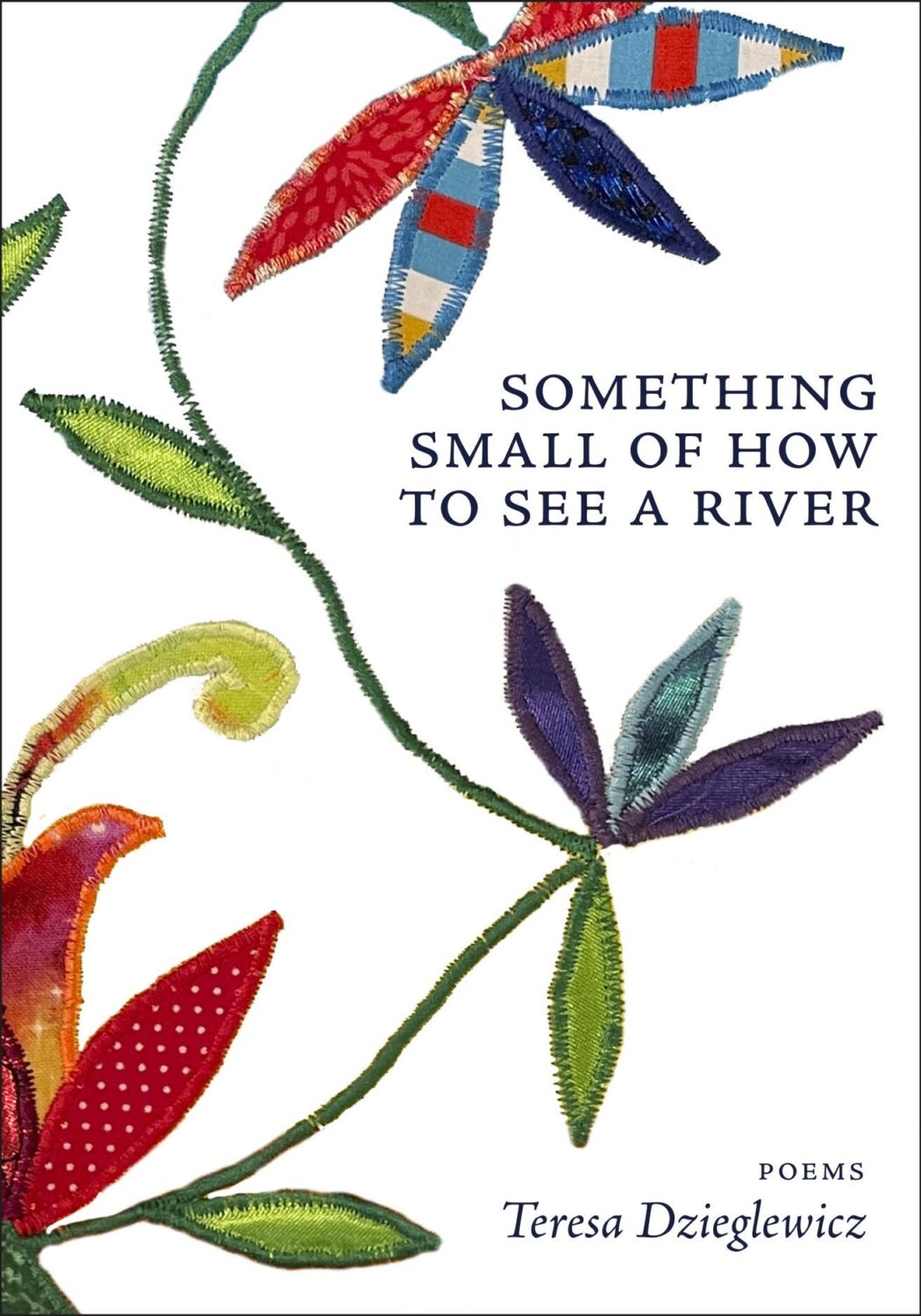
Over the course of a year, we planned and facilitated two kayak excursions and one soundwalk showcasing artists, historians, ecologists, and organizers who care deeply for and defend our river. This experience is emblematic of the kind of person Teresa is. She is ready and rooted to do the work that is needed to forge connection, education, and action to keep our waters safe, healthy, beautiful, alive and loved. When she asked me to have a conversation about Something Small Of How To See A River (Tupelo Press), a poetry collection that recounts the activities of the Standing Rock Reservation during the Dakota Access Pipeline protest, I felt like I was receiving a backstage pass to the origins of this love, this commitment, this fascination with rivers. I am honored to be a part of Teresa’s story and to learn the lessons of the people at Standing Rock through this gorgeous collection and to work towards making our world more connected to the land, the water, and the people that we love.
Natasha Mijares: What was a formative moment for you in studying and appreciating water?
Teresa Dzieglewicz: Growing up in the suburbs, I didn’t grow up surrounded by water. But, I think, being human, we know water is sacred, we want to be by water. We would go to the beach at Lake Michigan a couple times a year and I was just always in awe of the water—this incredible amount of space that I knew was incredibly powerful and that I couldn’t fully comprehend. There are things happening underwater, and there are worlds, and there are lives and ways of being that I can’t even imagine. But, It wasn’t until I was at Standing Rock that I was with a body of water every day and seeing what it looked like through different seasons, and seeing the ways the plants, the bugs, the ecosystem changed and moved. I camped right next to the river for a while, and our little school went there to pray and spend time with the water every day. And of course, the whole movement was about protecting and caring for and being in relationship with the water and I was learning so much from the community at camp all the time. I was just thinking constantly about the ways that the Missouri River was connected to everything. Everything I was seeing at this moment was connected; connected to so much politically, connected to so much historically, connected geographically to various places I’ve lived in or who are special to me, and to people I love—and it was really powerful, and really changed the way that I experience water.
You taught at the Rosebud Reservation between 2007-2011 and then you went to Standing Rock in 2016. How did that first experience shape your decision to go to Standing Rock?
I taught second through fifth grade classes at a very, very tiny school. So for a lot of my students I was their teacher for a very long time, and it was, I think, the best job I’ve ever had. My students were incredible—I loved them so much and got to know them so well. And of course, being in community there, I learned so much about movements for Indigenous sovereignty and spent a lot of time thinking about my role in supporting the incredible work so many people are doing. So in 2016, when I started seeing the Dakota Access Pipeline and Water Protector movement being covered on the news and on social media, I reached out to people I knew from the area to learn more about what was happening. I was in grad school at the time and I was supposed to go do a writing residency in Wyoming. I was planning to visit Rosebud on the way, and decided to go up to Standing Rock as well and drop off a few donations. Immediately, when I arrived, I experienced a very different reality from what was being shown on the news. The news was portraying it as dangerous yet I was being greeted with grandma’s running kitchens and serving soup. At first, I volunteered in the kitchens, washing dishes, cutting up vegetables, or whatever I could find to do. Then, I met Alayna Eagle Shield, who was starting a school for the kids who were living at the camp and she invited me to join her and help out for a couple days. It was incredible to see the work she was doing and this entirely different way of thinking about what a school could be. We met with the elders to ask them what was important for the kids to learn, and we asked the kids and their families and the community. It wasn’t about having one teacher stand at the front of a room—it was such a big and beautiful effort. So many people came to teach the kids—everything from making pots from the river clay, to drying corn, to playing lacrosse, to making documentaries. I love that the way the learning was structured was around our accountability to the community. Then, Alayna and her mom set up this wonderful little camper for me, and I just knew I could stay there, that the school was where I was supposed to be at that time.
What was the most challenging part of writing the book? Or some of the most challenging parts?
White people have written a lot about Indigenous communities and generally, not well. I had a lot of conversations with people I love about writing this book. And I feel like the hardest part to me was emotional, essentially living up to people trusting in me to write this. I wanted to be sure to write something that was going to honor them and honor our stories together, without trying to tell any parts of things that weren’t mine. Being a good relative is a central tenet of Lakȟóta culture, that people generously showed me in so many ways on both Rosebud and Standing Rock and that idea is really important to me. It was such an honor to be trusted as a guest in the camp and at the school. And it’s so important to me, as a white person, to not forget the colonial context that this is all happening in and what my role is. So, I try not to think of myself as an “ally” but as a relative to the land and community; and specifically a white relative, which has its own boundaries and roles. Being a relative is not something that goes away. When we make commitments to people, to communities, to land, we have to hold them. We have to cherish and honor them. I really tried to do this through the book, to tell the small bit of the story that is mine to tell, and to honor the experiences and commitments and knowledge and care of the camp and Water Protector movement.
So knowing that this experience happened a decade ago, when you’re reading these poems now, what is coming up for you? Are there things you’re learning and discovering that you hadn’t thought about or you’re seeing in a new way?
How lucky I was. I do think this experience was just such an entirely different way of living than I had ever lived before, or that I’ve ever been able to live since; to be so reliant on each other and what you learn in terms of taking care of other people and letting yourself be taken care of. I think I’ve tried to hold on to what I’ve learned there.
It’s of course felt very upsettingly resonant to be reading from this book during this time of intense police/government violence. It’s been a big reminder to hold on to the things I’ve learned from the Water Protector movement and the many people who took the time to teach me and to be in community with me. It’s a reminder of the level of radical generosity and care that existed in the camp—how deeply folks were committed to making sure that everyone was warm, had food, had the support they needed. Being able to read from this book is a reminder to me of my commitment to other people, my commitment to the land and water. It deepens my resolve to live in relationship and to build communities of care in whatever ways, even small, that I can.
I also think that one of the big things I had to process in writing this book was that sometimes movements “fail.” Sometimes we will work very very hard, and disastrous and heart-breaking things will still happen. So a lot of the energy around writing the book was unpacking the fact that this beautiful thing just happened, this camp that had been this magical place of care, and then the pipeline went through, and what does that mean? How do I make sense of that? And the writing helped me see all of the beautiful things that still blossomed from this work—so many relationships, so many other projects and movements, so much knowledge and community. We can’t control what the end result is, and we also can’t let ourselves be defeated when our work fails, as it inevitably will sometimes. No matter what, we always have to do the work of trying, that the trying in itself matters and is necessary and keeps us human.
There are so many stunning poems in this collection. I found myself very drawn to the way you play with forms like in “Postcard from Standing Rock,” which is a chiasmus and “August at Ochethi, One Year Later” which is an altered ghazal and “Pantoum (Obstructed) with Army Corps Decision & Lice Treatment On Abandoned Bus.” What is your relationship to form?
I do think this book forced me to write differently than I ever had. I was almost conceiving of this like a scrapbook. I didn’t want it to feel like a tidy group of poems. I wanted people to feel like they were experiencing the movement in a variety of different ways, and I found that a lot of the ways that I had written before just couldn’t do this. The varying forms also gave me ways to say things that I otherwise couldn’t figure out quite how to say. The series of poems “By the Numbers” (which use police documents), were the first poems that I wrote for the book. They really came out of this experience of not knowing how to write about the camp, and then reading all of these documents that felt so different from my own experience. I wasn’t quite able to write a full poem about this yet, but I did feel like I could perhaps write small corrections, or stories of what I knew into these documents. Similarly, in “Learning The Plum Pit Game” I list the rules of the game (taught to me by a mentor and friend, Steve Tamayo), and then I’m able to whisper some honest things into that container. A lot of the form was also determined by how important to me it was that the book felt really populated by the community at the camp, by the people who made the experience what it was for me. So a lot of the poems are shaped around the need to be able to hold a real amount of dialogue. Alayna Eagle Shield collaborated with me on the poem, “I Kept Thinking Back” and we were able to weave her story together with archival research of interviews with her great-great grandmother which was really special.
These days I have been thinking a lot about what you mentioned earlier, about our roles in our movements and really getting rooted in those roles in order to rebuild democracy. What role do you think poetry plays?
This is a question I really struggle with. I believe in the importance of art—but I don’t know that I have one big answer. I think every piece of art has to find its own answer to this question. That said, I think poetry is able to do something really special in the way it can hold so much at once—a lot of history, a lot of connection, a lot that’s beautiful and a lot that’s painful. Poetry makes space for these things to be in deep conversation with one another—for it all to fully exist. That feels really important to me. It feels critical for there to be this human and connected and related experiences of movement work, outside of the simplistic stories so often portrayed in the news or by the state. In writing the book, I really wanted to be able to share the joy of the movement, even amidst so much that was so hard. And I really wanted to show all of the small labor, all of the ways of taking care of each other, that made the movement possible. A lot of what society thinks of as movement work is the protest itself, the people on the front-lines. That’s critically important! But so are the spreadsheets, the stirring of soup, the sorting of donations. I think poetry can show these small actions and interactions—the sometimes tiny and deeply human and necessary ways that we care for each and for the land and water. I think it can remind us of why movement work is so important—resisting is a type of care, a type of love.
Thank you so much Natasha, for these beautiful and insightful questions and all that YOU do for community.
Note: Mní Wičhóni Nakíčižiŋ Wóuŋspe is still an ongoing effort. A team at Standing Rock, led by Memorie White Mountain, is still doing incredible work to provide community and land-based learning spaces for young people. You can find updates about the school here: https://www.facebook.com/DefendersoftheWaterSchool/
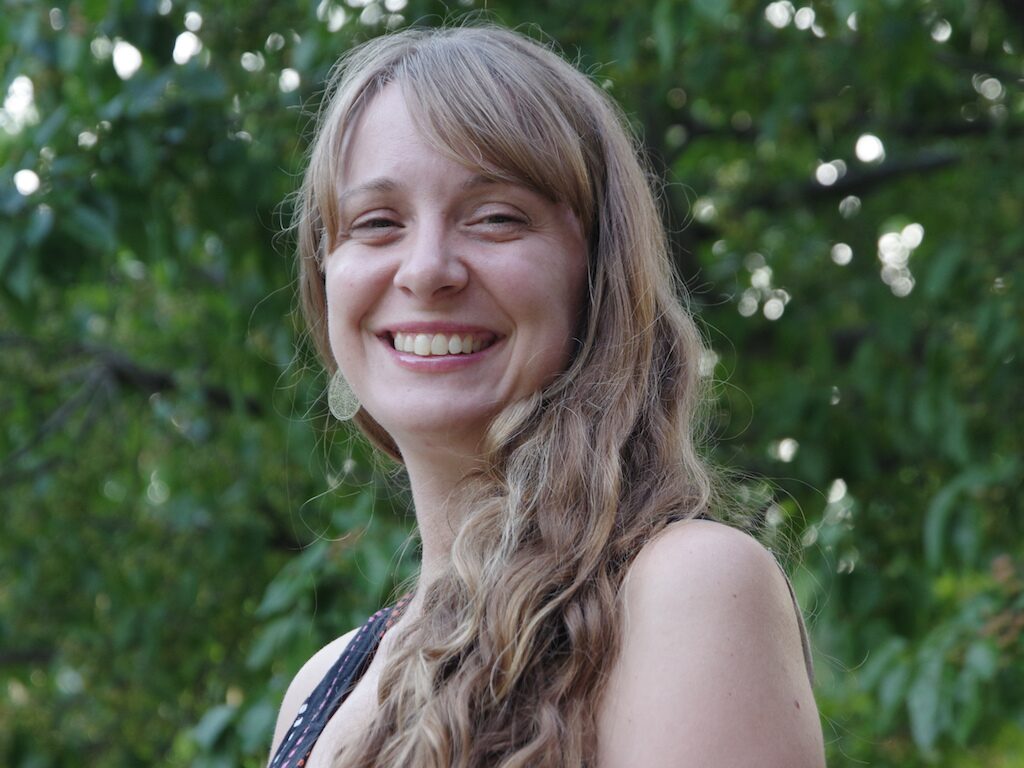
Teresa Dzieglewicz is a Pushcart Prize-winning poet, educator, and lover of rivers and prairies. She is a fellow with Black Earth Institute, a Poet-in-Residence at the Chicago Poetry Center, and part of the founding team of Mni Wichoni Nakicizin Wounspe (Defenders of the Water School). With Natasha Mijares, she organizes “Watershed: Ways of Seeing the Chicago River”. Her first book of poetry, Something Small of How to See a River was selected by Tyehimba Jess for the Dorset Prize (Tupelo Press). Her first children’s book, Belonging, co-written with Kimimila Locke, is forthcoming from Chronicle Books. She has won a Best New Poets prize, the Gingko Prize, the Auburn Witness Prize, and the Palette Poetry Prize and has received fellowships from the Elizabeth George Foundation, Community of Writers at Tahoe, Kimmel Harding Nelson Center, and Brooklyn Poets. Teresa lives with her family in Chicago, on Potawatomi land.
Natasha Mijares is an artist, writer, curator, and educator. She received her MFA in Writing from The School of the Art Institute of Chicago. She has exhibited at various international and national galleries. Her work has appeared in Gravity of the Thing, Hypertext Review, Calamity, Vinyl Poetry, and more.